How to Make PVC Patches at Home – Manufacturing Process
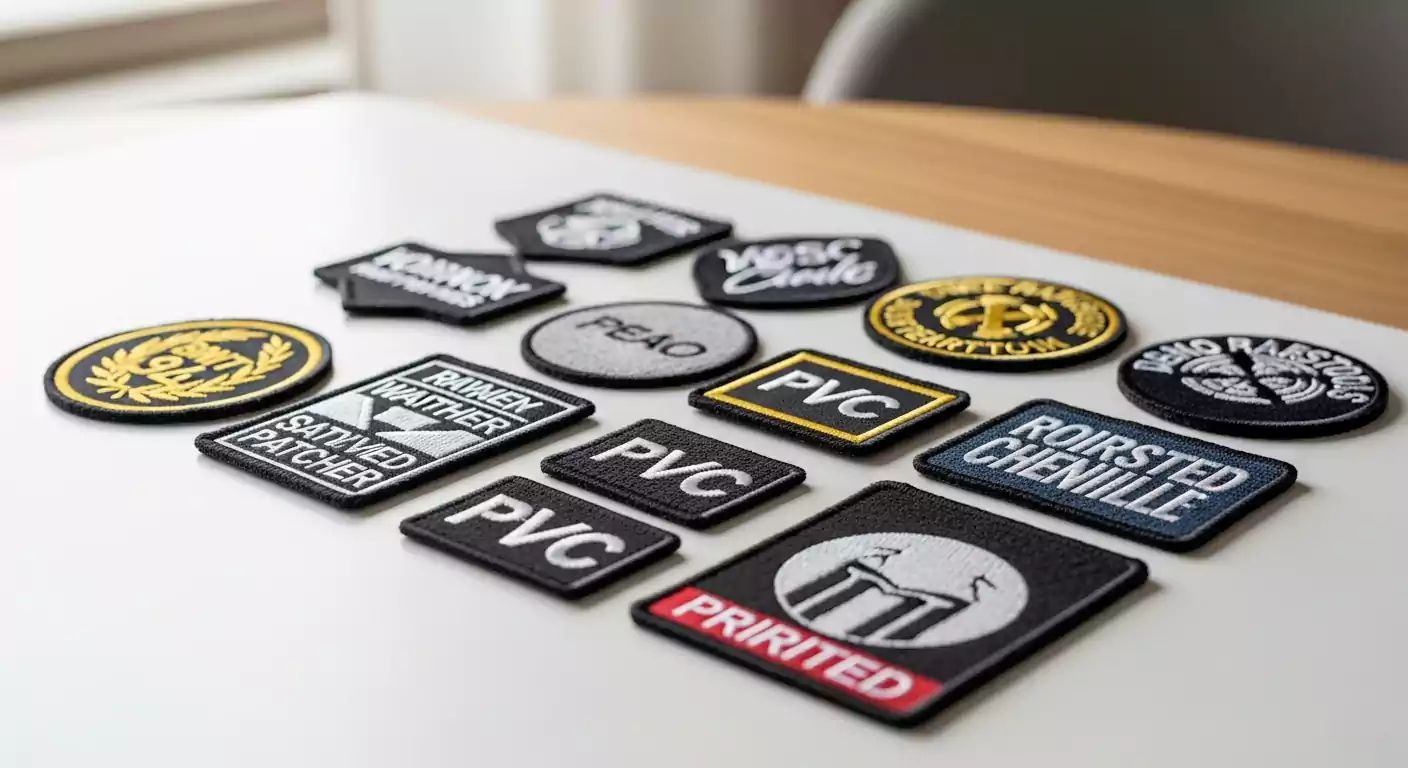
PVC patches are flexible rubber patches made from polyvinyl chloride (PVC) plastisol that is molded and heat-cured to form durable 2D or 3D designs. PVC patch manufacturing uses molds, layered color injection, and thermal curing to create waterproof patches with raised details and strong structural durability.
PVC patches function as durable identification and branding patches used across military, tactical gear, uniforms, hats, backpacks, and outdoor equipment. The molded rubber structure resists moisture, UV exposure, abrasion, and chemical damage, which makes PVC patches suitable for outdoor environments.
Key Attributes of PVC Patches
PVC patches contain several functional attributes that differentiate them from embroidered patches.
- Waterproof material – polyvinyl chloride resists water absorption
- Flexible rubber structure – plastisol curing creates soft rubber texture
- Raised 3D design – mold cavities produce dimensional designs
- Layered color system – colors are injected separately into mold cavities
- High durability – resistant to UV light, chemicals, and abrasion
These attributes allow PVC patches to maintain shape, color stability, and structural integrity under heavy usage.
Common Uses of PVC Patches
PVC patches are widely used across multiple industries where durability and visual clarity are required.
- Military patches used on tactical uniforms and combat gear
- Law enforcement patches used for identification badges
- Outdoor gear patches attached to backpacks and camping equipment
- Hat patches applied to caps and headwear
- Brand logo patches used for promotional merchandise
PVC patch applications continue to expand because molded rubber patches provide longer lifespan, stronger weather resistance, and clearer design details compared to traditional textile patches.
PVC patches therefore function as high-performance molded identification patches used across tactical, outdoor, and commercial branding environments.
How to Make PVC Patches at Home
Making PVC patches at home requires PVC plastisol material, color pigments, patch molds, and heating equipment that cures the liquid PVC into flexible rubber. These materials enable the molding process where colored PVC is injected into cavities and heat-cured to form durable PVC patches.
PVC patch production depends on four core material categories: PVC compound, coloring agents, molds, and curing equipment. Each component supports the molding, layering, and finishing stages of the PVC patch manufacturing workflow.
Essential Materials for DIY PVC Patch Production
The following materials are required to create PVC patches using a DIY manufacturing process.
- Liquid PVC plastisol – primary raw material used to form flexible rubber patches
- Color pigments or PVC color paste – used to create multi-color patch designs
- Patch molds (silicone or metal) – molds define patch shape and 3D design structure
- Mixing containers – used for blending plastisol with pigments
- Injection bottle or syringe – used to fill mold cavities with colored PVC
- Heat source (oven or heat press) – cures plastisol into solid flexible PVC
These materials collectively allow the layered molding process where colored PVC plastisol fills the mold cavities and solidifies through heat curing.
Optional Materials That Improve Patch Quality
Additional materials help improve finishing quality and patch usability.
- Mold release spray – prevents PVC from sticking to molds
- Precision trimming knife – removes excess rubber after curing
- Velcro hook and loop backing – used for tactical PVC patches
- Fabric backing layer – used for sew-on patch attachment
- Adhesive backing – used for peel-and-stick patches
These optional materials improve patch finishing, attachment functionality, and production efficiency during the DIY PVC patch manufacturing process.
Proper preparation of PVC plastisol, pigments, and molds ensures that PVC patches maintain accurate color separation, clean edges, and durable rubber structure after curing.
Tools and Equipment Used in DIY PVC Patch Production
DIY PVC patch production requires molding tools, injection tools, and heat-curing equipment that transform liquid PVC plastisol into solid flexible rubber patches. These tools support the essential manufacturing stages including mold filling, color layering, and thermal curing.
PVC patch manufacturing equipment can be divided into two operational groups: basic DIY tools and professional manufacturing machines. DIY equipment supports small-scale patch production, while industrial machines enable precise and high-volume PVC patch manufacturing.
Basic DIY Tools for Making PVC Patches
The following tools enable small-scale PVC patch production at home.
- Silicone patch molds – create the patch shape and define design cavities
- Plastic syringe or injection bottle – inject colored PVC plastisol into mold cavities
- Heat-resistant trays – hold molds during the curing process
- Mixing containers – blend plastisol with color pigments
- Precision tweezers or needles – correct small filling errors inside mold cavities
- Household oven or heat press – cure PVC plastisol into flexible rubber
These tools enable the manual mold filling and curing process, which forms the basic structure of a PVC patch.
Professional Equipment Used in PVC Patch Manufacturing
Large patch manufacturers use specialized machines to produce consistent PVC patches with high precision.
- CNC mold engraving machine – engraves aluminum molds based on vector designs
- PVC dispensing machine – automatically injects colored plastisol into mold cavities
- Industrial curing oven – controls curing temperature and curing time precisely
- Vacuum mixer – removes air bubbles from plastisol mixtures
- Hydraulic heat press – attaches patch backing materials
These machines allow factories to produce high-detail multi-layer PVC patches with consistent color separation and accurate 3D depth.
DIY PVC patch tools support experimentation and small production batches, while industrial PVC patch machines ensure precision manufacturing, faster production speed, and uniform product quality.
Step-by-Step Process to Make PVC Patches at Home
PVC patches are made by filling a mold with colored PVC plastisol in multiple layers and curing each layer with heat until the material forms a flexible rubber patch. The process follows a sequential workflow where design preparation, mold filling, and thermal curing transform liquid PVC into a finished molded patch.
The DIY PVC patch workflow consists of six main production stages that control design accuracy, color separation, and structural durability.
Step 1: Create the Patch Design
PVC patch production begins with preparing the patch artwork and defining the design structure.
Design preparation includes:
- converting the logo into vector format (AI, SVG, EPS)
- defining patch dimensions and border style
- separating colors into individual design layers
- defining raised and recessed areas of the patch
Vector artwork ensures that the mold can reproduce sharp edges and accurate design geometry during molding.
Step 2: Prepare the Patch Mold
The mold determines the final shape, depth, and 3D structure of the PVC patch.
Mold preparation involves:
- selecting silicone molds for DIY production
- cleaning mold cavities to remove dust or oil
- applying mold release spray to prevent sticking
- verifying that cavities match the patch design
Each cavity inside the mold corresponds to specific design areas where colored PVC will be injected.
Step 3: Mix PVC Plastisol With Pigments
PVC plastisol must be mixed with color pigments before it can be injected into the mold.
Material preparation includes:
- pouring liquid PVC plastisol into mixing containers
- adding color pigments or PVC color paste
- mixing until color becomes uniform
- adjusting viscosity if necessary
Proper pigment mixing ensures accurate color reproduction and uniform material flow inside mold cavities.
Step 4: Fill the Mold With Colored PVC
Colored PVC plastisol is injected into the mold cavities layer by layer.
Injection process includes:
- filling the first color layer using a syringe or injector
- injecting additional colors into separate cavities
- correcting overflow using needles or tweezers
- ensuring color boundaries remain separated
Layered injection creates the multi-color structure and raised design appearance typical of PVC patches.
Step 5: Heat Cure the PVC Patch
Heat curing converts liquid PVC plastisol into solid flexible rubber.
Typical curing process:
- placing the mold inside an oven or heat press
- heating between 160°C and 200°C
- curing for 3–8 minutes depending on thickness
During curing, the plastisol undergoes gelation and fusion, which forms the durable rubber structure of the PVC patch.
Step 6: Remove and Finish the Patch
After cooling, the cured PVC patch is removed from the mold and finished.
Finishing steps include:
- carefully demolding the PVC patch
- trimming excess rubber from edges
- cleaning patch surfaces
- attaching backing material if required
The finished PVC patch now contains molded rubber structure, defined color layers, and a stable patch shape suitable for practical use.
The step-by-step PVC patch workflow demonstrates how design preparation, mold injection, and thermal curing combine to produce durable molded PVC patches.
How Multi-Layer PVC Patch Designs Are Created
Multi-layer PVC patch designs are created by injecting different colors of PVC plastisol into separate mold cavities, forming raised 3D structures through sequential layering and heat curing. This layered manufacturing process allows PVC patches to display clear color separation, textured surfaces, and durable molded details.
PVC patch molds are engineered with different depth levels, where each depth corresponds to a specific design element. When colored plastisol is injected into these cavities, the mold structure produces the three-dimensional effect commonly seen in custom PVC patches.
Structure of Multi-Layer PVC Patch Design
A standard PVC patch typically contains multiple structural layers that build the final patch appearance.
- Detail layer – contains fine design elements such as logos, text, or icons
- Color layer – different pigment layers that create the visual pattern
- Border layer – outer raised edge that protects the patch design
- Base layer – foundational layer that holds the entire structure together
Each layer is injected separately and cured before the next layer is added. This sequential process ensures clean color boundaries and precise design geometry.
How Layered Injection Creates the 3D Effect
The 3D appearance of PVC patches results from controlled depth variation inside the mold cavities.
Key design mechanisms include:
- Raised mold areas create elevated surfaces
- Recessed mold cavities hold specific color layers
- Sequential curing stabilizes each layer before adding the next
- Border elevation protects internal design elements
This layered molding technique produces the distinct rubber texture, dimensional depth, and high durability that define PVC patch construction.
Multi-layer molding therefore enables PVC patches to maintain sharp design details, stable color separation, and long-term structural durability across tactical, uniform, and outdoor applications.
How Factories Manufacture PVC Patches (Industrial Workflow)
Factories manufacture PVC patches using CNC-engraved molds, automated PVC dispensing machines, and temperature-controlled curing ovens to produce high-precision molded rubber patches at scale. Industrial production ensures consistent color layering, accurate 3D depth, and large-volume output.
Professional PVC patch manufacturing follows a standardized industrial workflow where digital artwork is converted into molds and liquid PVC plastisol is injected through automated systems.
Industrial PVC Patch Manufacturing Process
PVC patch factories follow a structured production sequence to ensure precision and consistency.
- Artwork vectorization
The client logo is converted into vector format and prepared for mold engraving. - CNC mold engraving
Aluminum molds are engraved using CNC machines to define cavities and depth levels. - PVC plastisol preparation
PVC plastisol is mixed with pigments to achieve accurate color formulation. - Automated PVC injection
Dispensing machines inject colored PVC plastisol into mold cavities. - Heat curing process
Industrial ovens heat the mold to cure plastisol and form solid rubber layers. - Base layer formation
A final PVC base layer stabilizes the patch structure. - Patch demolding and trimming
Workers remove patches from molds and trim excess material. - Backing attachment
Velcro, sew-on, or adhesive backing is applied using heat press equipment. - Quality inspection
Finished patches are inspected for color accuracy, mold precision, and surface quality.
This structured workflow enables factories to produce large quantities of durable PVC patches with consistent design reproduction and precise layered molding.
Industrial manufacturing therefore provides higher production speed, stronger quality control, and consistent patch accuracy compared to small-scale DIY production.
Types of Backing Used for PVC Patches
PVC patch backing determines how the patch attaches to garments, tactical gear, hats, or accessories. Backing systems provide attachment functionality while maintaining the structural integrity of the molded PVC patch.
During PVC patch manufacturing, a backing layer is attached to the rear side of the patch using heat bonding, adhesive lamination, or stitching support layers. The backing type is selected based on the intended application environment.
Common PVC Patch Backing Types
Several backing options are commonly used in PVC patch production.
- Velcro hook and loop backing
Velcro backing allows patches to be easily attached and removed from tactical uniforms, backpacks, and military gear. - Sew-on backing
Sew-on backing includes a fabric base layer that allows the patch to be stitched directly onto garments. - Iron-on adhesive backing
Iron-on backing uses heat-activated adhesive that bonds the patch to fabric using a household iron or heat press. - Peel-and-stick adhesive backing
Adhesive backing uses pressure-sensitive adhesive for temporary patch application on smooth surfaces.
Use Cases for Different Backing Types
Different backing options support different operational uses.
- Military and tactical gear commonly use Velcro hook and loop backing.
- Uniform patches frequently use sew-on backing for permanent attachment.
- Promotional patches and merchandise may use iron-on adhesive backing.
- Temporary branding patches sometimes use peel-and-stick adhesive backing.
Selecting the appropriate backing type ensures that PVC patches maintain strong attachment, usability, and durability across different clothing and equipment applications.
Challenges of Making PVC Patches at Home
Making PVC patches at home is technically possible but difficult because mold precision, color control, and curing temperature require specialized manufacturing equipment. DIY production often struggles to achieve the same design accuracy and durability produced by professional PVC patch factories.
PVC patch manufacturing depends on precise mold geometry, controlled plastisol viscosity, and consistent heat curing, which are difficult to replicate in a home environment.
Common Challenges in DIY PVC Patch Production
Several technical limitations affect small-scale PVC patch manufacturing.
- Mold manufacturing complexity
Accurate PVC patch molds require CNC engraving to create detailed cavities and depth levels. - Color separation difficulty
Multiple colors must be injected into specific mold cavities without mixing. - Temperature control during curing
PVC plastisol must cure within a narrow temperature range to form flexible rubber. - Material handling issues
Incorrect plastisol viscosity can cause bubbles, overflow, or incomplete mold filling.
These technical challenges often lead to imperfect edges, uneven color layers, and inconsistent patch thickness.
Production Limitations of DIY PVC Patches
Home-based production also faces operational limitations.
- Low production volume due to manual injection processes
- Longer production time compared to automated factory machines
- Limited design complexity because detailed molds are difficult to create
- Inconsistent quality control without industrial inspection equipment
Because of these limitations, DIY PVC patch production is typically suitable only for experimentation, small prototypes, or hobby projects.
Professional PVC patch manufacturers overcome these challenges using CNC mold engineering, automated dispensing machines, and industrial curing ovens that maintain consistent production accuracy.
How to Order Custom PVC Patches
Custom PVC patches are ordered by submitting a patch design to a manufacturer, approving digital artwork, creating a mold, producing a sample, and starting mass production. This structured ordering workflow ensures accurate mold production, color consistency, and reliable patch quality.
Professional manufacturers manage the entire PVC patch production cycle, including artwork preparation, mold engineering, plastisol molding, and final patch finishing.
Custom PVC Patch Ordering Process
The standard ordering workflow follows several production stages.
- Submit patch design
Customers provide logo artwork, patch size, colors, and preferred backing type. - Artwork digitization and design proof
The manufacturer converts the design into vector format and prepares a digital patch preview. - Mold manufacturing
A CNC-engraved aluminum mold is created to match the approved patch design. - Sample patch production
A prototype PVC patch is produced for customer approval. - Mass production
After sample approval, factories begin large-scale patch production. - Packaging and delivery
Finished patches are inspected, packed, and shipped to the customer.
Customization Options for PVC Patches
Custom PVC patches can be manufactured with multiple customization attributes.
- Patch size and shape
- 2D or 3D molded design
- multi-color PVC layering
- raised border styles
- different backing types (Velcro, sew-on, adhesive)
These customization options allow businesses, military units, and brands to create distinct molded PVC patches for uniforms, merchandise, and promotional products.
Custom PVC Patch Manufacturing Services
Specialized manufacturers such as NexusPatches provide professional PVC patch production services including:
- custom mold creation
- precise Pantone color matching
- multiple backing options
- low minimum order quantities
- international shipping
Professional manufacturers ensure that custom PVC patches maintain consistent mold precision, color accuracy, and structural durability across all production batches.
Custom PVC patch manufacturing therefore provides the most reliable solution for organizations that require durable, high-quality molded patches with accurate design reproduction and scalable production capacity.







Post Comment