Kathleen Nimmo Lynch: Career, Celtics Role, and What’s Confirmed About the 2022 Controversy
23 Dec 2025

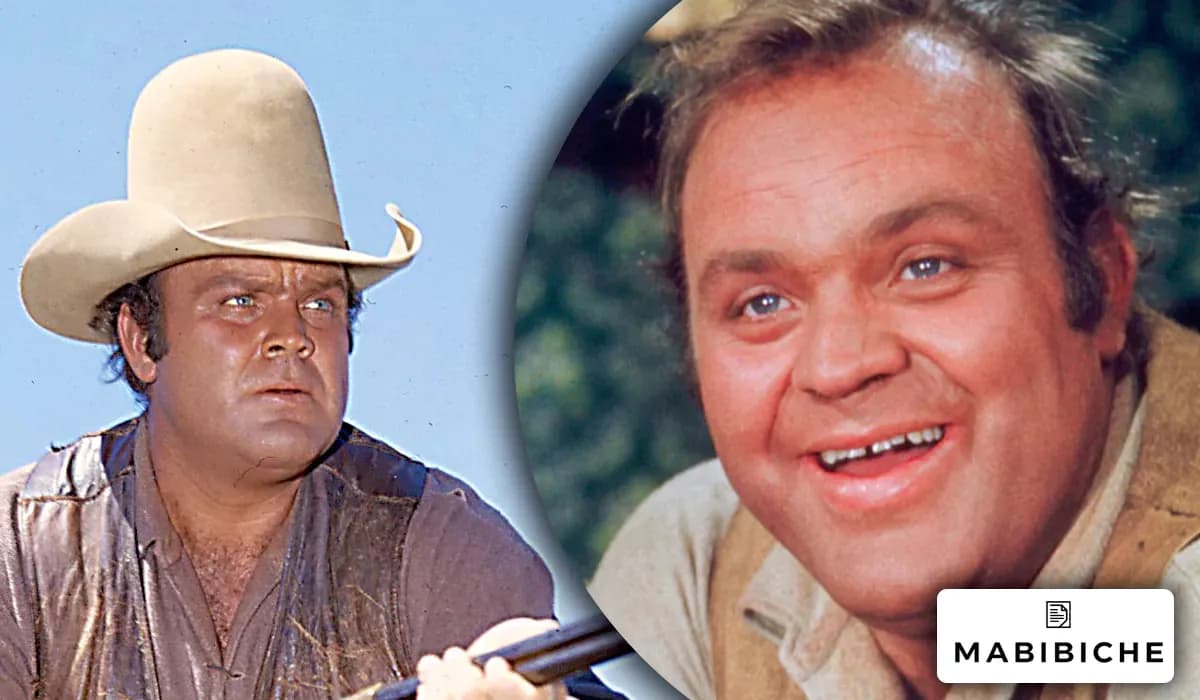
Dan Blocker remains one of the most recognizable figures in American television history, remembered not only for his towering presence but for the warmth and integrity he brought to the screen. Best known for portraying Eric “Hoss” Cartwright on Bonanza, Blocker’s life extended far beyond Hollywood. He was a decorated Korean War veteran, a dedicated educator, and a man deeply committed to family, faith, and principle.
Born in Texas in 1928, Blocker followed a path shaped by discipline, service, and learning long before fame arrived. His journey—from classrooms and battlefields to one of television’s most beloved Westerns—offers a rare portrait of a performer whose character off-screen matched the decency he portrayed on-screen.
| Field | Details |
| Full Name | Bobby Dan Davis Blocker |
| Known As | Dan Blocker |
| Date of Birth | December 10, 1928 |
| Place of Birth | De Kalb, Texas, United States |
| Date of Death | May 13, 1972 |
| Age at Death | 43 years |
| Nationality | American |
| Profession | Television Actor, Educator |
| Famous For | Role of Hoss Cartwright on Bonanza |
| Military Service | U.S. Army (Korean War) |
| Military Rank | Infantry Sergeant |
| Military Honors | Purple Heart, Combat Infantryman Badge |
| Education | Sul Ross State University (BA, MA in Drama) |
| Religion | Free Methodist |
| Political Affiliation | Democratic Party |
| Spouse | Dolphia Parker (m. 1952) |
| Children | Dirk Blocker, David Blocker, Debra Lee, Danna Lynn |
| Height | 6 ft 4 in (1.93 m) |
| Weight | Approx. 300 lb (140 kg) |
| Years Active | 1957–1972 |
| Cause of Death | Pulmonary embolism after surgery |
| Burial Place | Woodmen Cemetery, De Kalb, Texas |
Dan Blocker’s early years laid the foundation for the strength, humility, and empathy that would later define both his personal life and his acting career. Raised in Texas during the Great Depression era, he grew up in an environment that valued responsibility, resilience, and hard work.
Born as Bobby Dan Davis Blocker on December 10, 1928, in De Kalb, Texas, he was the son of Ora “Shack” Blocker and Mary Arizona Davis Blocker. Shortly after his birth, the family relocated to O’Donnell, Texas, where his parents operated a grocery store that became central to the local community.
From an early age, Blocker was accustomed to responsibility. Life in a small Texas town instilled in him a sense of duty and connection to others—traits that would remain constant throughout his life.
Blocker’s physical presence was remarkable from birth. Reportedly weighing 14 pounds as a newborn, he grew into a man who stood 6 feet 4 inches tall and weighed nearly 300 pounds. Despite his imposing stature, he was widely remembered as gentle, approachable, and good-natured.
Teachers and peers consistently described him as kind-hearted and disciplined, a combination that helped him excel in both athletics and academics. His size made him a natural fit for football, but his temperament revealed a deeper intellectual and creative inclination.
Before acting ever became a profession, education played a central role in Dan Blocker’s identity. His academic path reflects a rare balance between physical excellence and intellectual curiosity.
As a teenager, Blocker attended Texas Military Institute in San Antonio. The structured environment reinforced discipline, leadership, and accountability—qualities that later shaped his military service and professional reliability.
Blocker initially pursued higher education at Hardin–Simmons University in Abilene, Texas, where he played college football on scholarship. While he demonstrated athletic promise, his interests increasingly shifted toward speech, storytelling, and performance rather than a long-term sports career.
In 1947, Blocker transferred to Sul Ross State University in Alpine, Texas. There, he emerged as both a standout football player and a dedicated student of drama. He graduated in 1950 with a degree in speech and drama, formally choosing education and the arts over professional athletics.
This decision marked a turning point—one that ultimately led him toward teaching, military service, and later, acting.
Before audiences knew his face, Dan Blocker was shaping young minds in classrooms across Texas and New Mexico. Teaching was not a fallback for him; it was a calling rooted in respect for education and mentorship.
From 1953 to 1954, Blocker worked as a high school English and drama teacher in Sonora, Texas. His background in speech and performance made him a natural educator, and he was well-regarded for his patience and ability to inspire students.
He later moved to Carlsbad, New Mexico, where he taught sixth grade and coached at Eddy Elementary School. These roles reinforced his commitment to education and community service, even as he quietly nurtured academic ambitions beyond the classroom.
After completing his military service, Blocker earned a master’s degree in dramatic arts and relocated with his wife to Los Angeles. His original goal was to pursue further graduate study at University of California Los Angeles, not to seek fame. Acting opportunities emerged gradually—and unexpectedly—alongside his academic pursuits.
Dan Blocker’s military service represents one of the most defining—and often underemphasized—chapters of his life. Long before he became a familiar face on American television, Blocker served his country in combat, an experience that shaped his worldview, discipline, and sense of responsibility.
Blocker was drafted into the United States Army during the Korean War. He completed basic training at Fort Polk, Louisiana, where his size, leadership qualities, and composure quickly distinguished him from his peers.
He was deployed to Korea in December 1951 and assigned to F Company, 2nd Battalion, 179th Infantry Regiment, part of the 45th Infantry Division. His service placed him directly in frontline conditions during one of the most intense periods of the conflict.
While serving as an infantry sergeant during the Korean War, Blocker was wounded in combat. Despite the dangers of active infantry duty, accounts consistently describe him as calm under pressure and deeply protective of the soldiers under his command.
His combat experience was not something he frequently discussed publicly, but those who knew him later in life noted that the war instilled in him a lasting appreciation for life, empathy for others, and a quiet emotional depth—qualities that would later surface in his acting.
For wounds sustained in combat, Dan Blocker was awarded the Purple Heart. In addition, he received several other military honors, including:
These decorations reflect not symbolic service, but direct participation in combat operations.
After completing his military service, Dan Blocker returned to civilian life with renewed focus and perspective. His next chapter would take him away from classrooms and toward television studios—but only after a gradual and uncertain transition.
Blocker returned to academic life and teaching before slowly entering acting through small, uncredited roles. In 1957, he appeared in several films and television productions, including a memorable performance in the Three Stooges short Outer Space Jitters, where he was billed as “Don Blocker.”
These early roles often leaned into his imposing size, casting him as bartenders, guards, or enforcers—functional characters that helped him gain industry experience.
Throughout the late 1950s, Blocker became a familiar face across popular Western television series. He appeared in shows such as Gunsmoke, The Rifleman, Have Gun – Will Travel, Cheyenne, and The Restless Gun.
These performances established him as a dependable character actor within the Western genre, particularly on NBC productions.
Blocker’s professionalism, reliability, and commanding presence made him a natural fit for television Westerns. Producers recognized that, unlike many physically imposing actors, he brought warmth and intelligence to his roles. This rare combination positioned him for a breakthrough opportunity—one that would permanently shape his legacy.
That opportunity arrived in 1959.
Dan Blocker’s career reached its defining moment in 1959, when he was cast in the role that would make him a household name. His portrayal of Eric “Hoss” Cartwright became one of the most enduring character performances in American television history.
Blocker was cast as the middle son, Eric “Hoss” Cartwright, on Bonanza, created by David Dortort and broadcast on NBC. Premiering in 1959, Bonanza followed the Cartwright family, owners of the vast Ponderosa Ranch near Virginia City, Nevada.
At the time of casting, Blocker was not yet a star. However, his commanding physical presence combined with a naturally gentle demeanor made him uniquely suited for the role. Over time, Hoss Cartwright would become the emotional center of the series.
Unlike typical Western archetypes that emphasized toughness and stoicism, Hoss Cartwright represented kindness, empathy, and moral clarity. Blocker famously modeled his portrayal around a guiding principle attributed to Stephen Grellet: if kindness can be shown, it should be shown now.
This philosophy resonated deeply with audiences. Hoss was physically powerful yet emotionally open, capable of both humor and profound compassion. Blocker’s real-life intellect and sensitivity gave the character authenticity, transforming what could have been a stereotype into a fully realized human presence.
Dan Blocker appeared in 415 episodes of Bonanza over thirteen seasons, remaining with the series from its debut until his death in 1972. During this period, Bonanza became one of the longest-running and most-watched television Westerns in history.
Hoss Cartwright emerged as a fan favorite, particularly among younger viewers and families. His appeal transcended age and background, reinforcing the show’s reputation as a character-driven drama rather than a violence-centered Western.
For many viewers, Blocker was not merely playing Hoss—he was Hoss. That seamless identification speaks to the depth and sincerity of his performance.
Although Bonanza defined Dan Blocker’s public identity, he pursued film and television projects that demonstrated his range beyond the Ponderosa Ranch.
In 1963, Blocker appeared alongside Frank Sinatra in the comedy Come Blow Your Horn, based on the Neil Simon play. He later reunited with Sinatra in the 1968 crime film Lady in Cement, where he played a far more menacing character than audiences were accustomed to seeing.
These roles allowed Blocker to briefly escape typecasting and showcase his versatility.
Director Stanley Kubrick attempted to cast Blocker as Major T.J. “King” Kong in Dr. Strangelove. According to the film’s co-writer, the role was declined by Blocker’s agent, and it ultimately went to Slim Pickens.
The missed opportunity has since become one of Hollywood’s most discussed “what if” casting decisions.
Blocker’s most critically appreciated non-Bonanza performance came in the television film Something for a Lonely Man, where he starred as John Killibrew, a blacksmith leading settlers westward. He later appeared in The Cockeyed Cowboys of Calico County (1970), blending comedy and Western tradition.
Director Robert Altman also planned to cast Blocker in The Long Goodbye, but Blocker passed away before filming began. The film was later dedicated to his memory.
Beyond acting, Dan Blocker demonstrated a practical, entrepreneurial side that complemented his steady television career. In 1963, at the height of Bonanza’s popularity, he became a partial owner of the Bonanza Steakhouse franchise.
The Bonanza Steakhouse concept capitalized on the show’s name recognition, but Blocker’s involvement was more than symbolic. He invested in the venture and helped establish the brand during its early expansion years. The restaurants quickly grew into a successful national chain, reflecting Blocker’s sound business judgment and willingness to diversify beyond entertainment.
As part of the agreement, Blocker occasionally appeared in character as Hoss Cartwright for promotional efforts and personal appearances at franchise locations. These appearances reinforced his image as approachable and sincere—qualities that audiences already associated with him.
The venture provided financial stability and long-term security, allowing Blocker to support his family and remain selective about acting roles.
Despite widespread fame, Dan Blocker remained deeply grounded in family life, personal faith, and civic values. Those who knew him consistently described a man who prioritized home over Hollywood.
Blocker married Dolphia Parker in 1952 after meeting her during his college years at Sul Ross State University. Their marriage endured throughout his life and remained largely private, even as his public profile grew.
Together, they raised four children, maintaining a household structured around stability, education, and mutual respect rather than celebrity culture.
Dan Blocker’s children went on to successful creative careers of their own:
His twin daughters, Debra Lee and Danna Lynn, pursued creative paths outside mainstream Hollywood, reflecting the family’s emphasis on individuality rather than public exposure.
Blocker was a committed Free Methodist, and his faith informed his emphasis on kindness, humility, and ethical responsibility. Politically, he identified as a liberal Democrat and was active in civic life.
He supported California Governor Pat Brown’s re-election in 1966 and later backed Senator Eugene McCarthy during the 1968 Democratic presidential primaries. Afterward, he supported Hubert Humphrey in the general election. These positions reflected his belief in social responsibility, civil rights, and thoughtful governance.
Importantly, Blocker never treated politics as performance. His advocacy was measured, sincere, and consistent with his personal values.
Dan Blocker’s life and career came to a sudden and tragic end in 1972, marking a turning point not only for Bonanza but for American television as a whole.
On May 13, 1972, Dan Blocker died at the age of 43 in Inglewood, California. He passed away from a pulmonary embolism following gallbladder surgery at Daniel Freeman Hospital.
The news shocked fans, colleagues, and the entertainment industry. At the height of his career and personal life, Blocker’s death was widely regarded as one of television’s most unexpected losses.
Because Bonanza was still airing at the time, the writers made an unprecedented decision. Rather than recasting or ignoring the loss, the series acknowledged the death of Hoss Cartwright within its storyline.
This marked one of the first times in television history that a major series directly addressed the real-life death of a principal character. Although the specifics of Hoss’s death were left understated, the emotional absence was unmistakable.
Bonanza continued for one additional season without Hoss. Ratings declined noticeably, and cast members later acknowledged that the show never fully recovered from Blocker’s absence.
Co-star Michael Landon later stated that whenever he needed to cry on screen, he would think of Dan Blocker’s death—a testament to the deep personal loss felt by those who worked with him.
More than five decades after his passing, Dan Blocker’s influence remains firmly embedded in American television history.
Several landmarks honor his memory:
He is also listed on the West Texas Walk of Fame and memorialized in his hometown of O’Donnell, Texas.
Blocker redefined masculinity in the Western genre. His portrayal of Hoss Cartwright proved that physical strength could coexist with compassion, emotional intelligence, and moral conviction.
At a time when Western heroes were often stoic and violent, Blocker offered a different archetype—one that emphasized kindness, loyalty, and ethical courage.
Dan Blocker’s legacy endures because it was authentic. He was not merely acting decency; he lived it. As a war veteran, educator, family man, and performer, he embodied integrity both on and off the screen.
His work continues to resonate with audiences who recognize that true strength lies in empathy.
Dan Blocker’s life cannot be reduced to a single role, even one as iconic as Hoss Cartwright. He was a decorated Korean War veteran, a committed educator, a thoughtful actor, and a man guided by strong moral values.
His journey—from Texas classrooms and battlefields to television history—stands as a rare example of purpose-driven success. Dan Blocker did not chase fame; he earned respect. In doing so, he left behind a legacy that remains deeply human, profoundly influential, and timeless.
Who was Dan Blocker?
Dan Blocker was an American television actor, Korean War veteran, and educator best known for playing Hoss Cartwright on Bonanza.
How old was Dan Blocker when he died?
He was 43 years old at the time of his death in 1972.
Did Dan Blocker serve in the military?
Yes. He served as an infantry sergeant during the Korean War and received a Purple Heart.
Was Dan Blocker a teacher before acting?
Yes. He taught English, drama, and elementary school before entering acting.
Why was Dan Blocker important to Bonanza?
His character, Hoss Cartwright, was the emotional heart of the series and a fan favorite for thirteen seasons.
Did Bonanza continue after his death?
Yes, but only for one season. The show ended in 1973.
Who are Dan Blocker’s children?
His sons include actor Dirk Blocker and producer David Blocker.


